The top PreSales AI tools in 2026 fall into six categories: PreSales management, live call assistance, conversation intelligence, demo automation, RFP response and AI assistants connected through MCP. However, most teams need two or three of them, not all six, and the deciding factor is usually which data each tool can see.
Ask a PreSales leader what is in their stack and you will hear a familiar list: a demo tool, an RFP tool, call recording, a spreadsheet for capacity and, increasingly, an AI assistant or two. Each one promises to give sales engineers time back. Yet together, they can scatter the evidence of whether a deal will close across five different places.
So this guide explains where AI for PreSales support actually helps, names the main tools in each category, sets out the data sources PreSales automation should draw on, and finally gives you five questions for evaluating any tool before you buy.
Why Are PreSales Teams Buying AI Tools?
The pressure on sales engineering time is real. For example, in the 2026 Sales Engineering Compensation and Workload Report from Consensus (423 PreSales professionals, April 2026), SEs said only 56% of their time goes on direct sales work. The other 44% goes on implementation support, marketing and product collaboration. As a result, reducing repetitive tasks was their top request. Consensus sells demo automation, so read its research with that in mind.
There is a catch, though. Salesforce’s State of Sales 2026 found that 51% of sales leaders using AI say disconnected systems are slowing their AI initiatives (4,050 sales professionals in 22 countries, surveyed August to September 2025). In other words, every new tool can add capacity and another data silo at the same time.
A useful way to picture it: your stack is a relay team. Each tool runs one leg well, but you still lose the race if the baton, the deal context, drops between legs.
The Six Categories at a Glance
| Category | The question it answers | Tools covered |
|---|---|---|
| PreSales management and opportunity intelligence | Are we winning the technical evaluation, and where is our time going? | Elvance, Homerun |
| Live call assistance | How do reps get technical answers on calls an SE cannot join? | Hero by Vivun |
| Conversation and revenue intelligence | What actually happened across our customer conversations? | Gong, Chorus by ZoomInfo, Salesloft (including Clari), Avoma, Otter.ai |
| Demo automation | How do we stop rebuilding the same demo every week? | Storylane, Walnut, Navattic, Consensus, Reprise |
| RFP and security questionnaire response | How do we answer questionnaires without pulling SEs off live deals? | Loopio, Responsive |
| AI assistants connected through MCP | Can I ask one assistant about everything? | Claude, ChatGPT, Gemini, Microsoft Copilot |
1. PreSales Management and Opportunity Intelligence
This is the PreSales team’s operating layer: technical qualification, evaluation progress, product gaps, SE capacity and reporting to leadership.
Elvance runs natively inside Salesforce. First, AI Technical Scorecards sit on the Opportunity record. In addition, Elvance links product gaps to the deals they affect and pushes them to Jira, Linear, Productboard or Aha!, while calendar sync from Google Calendar or Microsoft Outlook logs meetings and demos against the right opportunity. Pre-built Salesforce dashboards then show win rates, revenue at risk and technical qualification. Because the data is part of the Opportunity, AEs and sales leaders see PreSales signals where they already forecast.
Homerun describes itself as an AI-native PreSales workspace. Each deal gets its own workspace with POC and POV evaluation plans, product gap and activity tracking, value mapping and AI agents that capture data from calls and update the CRM. It also connects to Salesforce, HubSpot, Jira and Gong, so it suits teams that want structured, template-led POCs in a dedicated tool.
In short, the main difference is architecture: a separate workspace that syncs with your CRM, or PreSales data that lives in the CRM itself.
2. Live Call Assistance
Hero by Vivun is an AI sales teammate. It prepares reps before calls, surfaces answers and battle cards during them, and then drafts follow-ups afterwards, writing activity and next steps back to Salesforce or HubSpot.
For PreSales, the appeal is coverage: putting the team’s technical knowledge into deals you do not have the headcount to staff. However, Vivun built Hero mainly for the seller on the call, so it complements a PreSales system of record rather than replacing one.
3. Conversation and Revenue Intelligence
Conversation intelligence records customer calls and meetings and turns them into deal insight. In fact, many PreSales teams already have one of these tools through their sales organization:
- Gong captures calls, emails and meetings, then applies AI agents to flag deal risk, support coaching and inform forecasting.
- Chorus by ZoomInfo records and analyzes calls, meetings and emails, and also syncs contacts and activity to the CRM for deal intelligence.
- Salesloft merged with Clari and has operated as one company since September 2026. Clari Forecast keeps its name, while Salesloft now brings sales engagement, conversation intelligence and forecasting together.
- Avoma combines an AI meeting assistant with conversation and revenue intelligence, automating notes, follow-up emails and CRM updates.
- Otter.ai is an AI sales notetaker that prepares pre-call briefs, transcribes live and syncs CRM-ready notes to Salesforce and HubSpot.
Meanwhile, meeting platforms are building the same capability in. For example, Zoom’s AI Companion now takes notes across Zoom, Microsoft Teams and Google Meet.
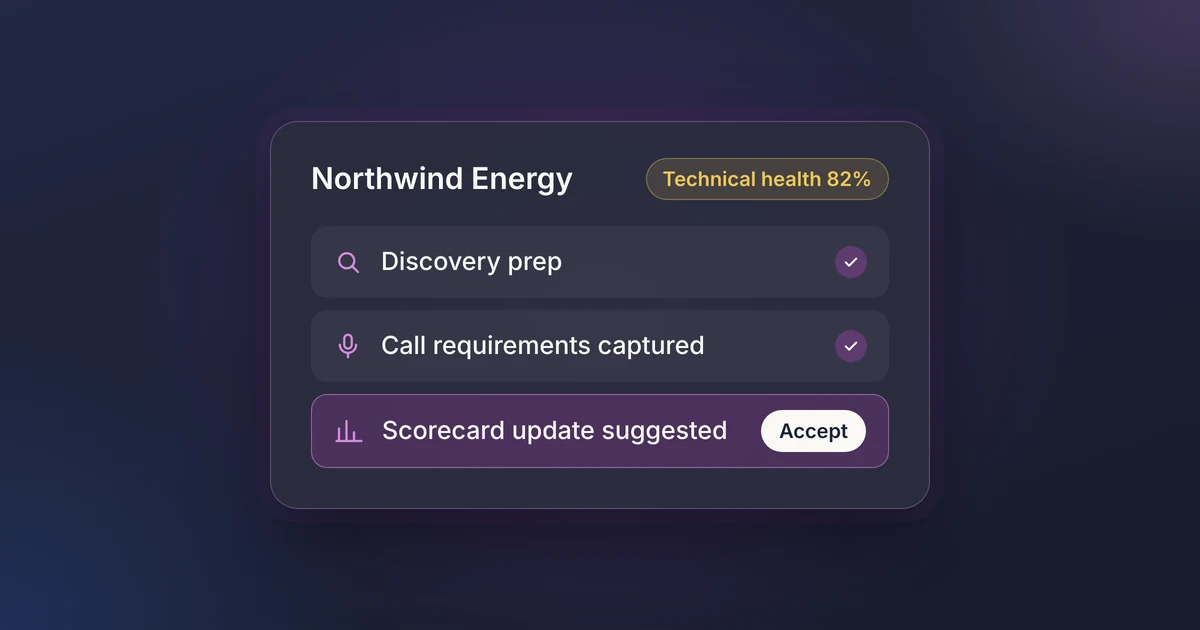
Still, conversation data is evidence, not a verdict. It shows what people said, but someone still needs to judge whether the product meets a technical requirement and record that against the deal. That is where the two categories meet: Elvance turns transcripts from Microsoft Teams, Zoom, Google Meet, Chorus, Otter.ai and Avoma into suggested technical scorecard updates for the SE to accept or reject. In the other direction, it also brings technical health and deal risk into Gong, Clari and Salesloft forecasting.
4. Demo Automation for Scaling PreSales
Demo automation lets buyers explore your product without an SE on every call. These are the main platforms PreSales teams evaluate:
- Storylane builds interactive demos, sandbox demos and Hubs, its digital sales rooms. It also offers RepX, a website agent that answers product questions and books meetings.
- Walnut uses AI to generate, personalize and maintain interactive demos and deal rooms for each buyer.
- Navattic pairs interactive demos built with its AI Copilot with AI agents that guide and qualify prospects, plus Launchpad, which helps sales teams share demos earlier in the cycle.
- Consensus offers AI-powered interactive product tours, on-demand video demos and analytics that show which stakeholders watched what.
- Reprise captures a web application at the code level and fills it with AI-generated data, producing demo environments from guided tours to full clones.
The prize is prep time. In the Consensus report, 28% of respondents said they spend six or more staff hours preparing and following up a single demo. Elvance also connects to Consensus, so buyer engagement with interactive demos sits on the deal in Salesforce rather than staying in the demo tool.
Above all, for enterprise teams scaling demos across regions and segments, the questions that separate tools are about control: who can edit which demos, whether demo data looks realistic without exposing real customer records, and whether engagement analytics reach the CRM or stay in the demo tool.
5. RFP and Security Questionnaire Response
Loopio and Responsive both keep a governed library of approved content and use AI to draft answers to RFPs, due diligence questionnaires and security questionnaires. For instance, Responsive uses AI agents to analyze requirements and draft cited answers, while Loopio’s Response Intelligence generates drafts from your knowledge base.
As a result, SEs face fewer interruptions for questions the team has already answered.
6. AI Assistants Connected Through MCP
The Model Context Protocol (MCP) is an open standard that lets AI assistants read from and act in other tools. Anthropic introduced it in 2024 and then donated it to the Agentic AI Foundation, part of the Linux Foundation, in December 2025. Since then, several PreSales and revenue vendors have added support, including Elvance, Homerun, Hero by Vivun, Consensus, Storylane and Salesloft.
The Elvance connector works with Claude, ChatGPT, Gemini and Microsoft Copilot, so SEs and leaders can query and update their pipeline from whichever assistant they already use.
That said, an assistant is only as useful as the data behind it, which makes the question of where your PreSales data lives more important, not less. Our guide to MCP for PreSales covers what this looks like day to day.
What Data Sources Should PreSales Automation Use?
PreSales automation is only as good as the evidence it reads. At a minimum, therefore, it should draw on six sources:
| Data source | What it tells you | Typical tools |
|---|---|---|
| CRM Opportunity data | Stage, value, close date and stakeholders | Salesforce |
| Call and meeting transcripts | What the buyer asked, objected to and agreed | Microsoft Teams, Zoom, Google Meet, Gong, Chorus, Otter.ai, Avoma |
| Calendar activity | Where SE time goes, deal by deal | Google Calendar, Microsoft Outlook |
| Demo engagement | Which stakeholders watched what, and for how long | Storylane, Walnut, Navattic, Consensus, Reprise |
| Product gaps and roadmap | Which missing features block which deals | Jira, Linear, Productboard, Aha! |
| Approved content library | Answers that product, legal and security teams have approved | Loopio, Responsive |
The trap is letting each source produce its own score in its own app. Instead, pick one place where they combine against the Opportunity, so the AE, the SE and the forecast all read the same record.
How Should Revenue Teams Evaluate PreSales Automation Software?
Most teams do not need all six categories. So whether the buyer is the PreSales leader, RevOps or the CRO, use these five questions before you add another tool.
- What is the bottleneck? Demo prep, RFP volume, call coverage and visibility each point to a different category. Start with the one costing the most SE hours.
- Where does the system of record live? Decide where you record technical qualification, evaluation status and product gaps before adding point tools around them.
- Does it write back? Check whether a tool updates your Salesforce Opportunity data or instead keeps its insights inside its own app.
- What can the AI see, and who processes it? Ask which of the data sources above it reads, for the sub-processor list, which AI models it uses, and whether you can bring your own AI provider.
- Which number will prove it worked? Pick one metric before you buy, such as demo prep hours, RFP turnaround or technical win rate, and then baseline it now.
Where Elvance Fits
We designed Elvance to be the PreSales layer of your Salesforce org, and the place the rest of your stack reports into. For example, call transcripts suggest scorecard updates, deal risk flows into Gong, Clari and Salesloft forecasts, Consensus demo engagement links to the deal, and product gaps go to engineering. Elvance then records all of it on the Opportunity, where the forecast can see it. Your PreSales data also lives in your Salesforce org, and optional AI features use OpenAI or your own AI provider, as our security and architecture overview sets out.
Which Tools Does Elvance Connect To?
| Workflow | Tools | What Elvance does |
|---|---|---|
| CRM | Salesforce | Runs natively, so PreSales data lives on your Salesforce records |
| AI Tools | Claude, ChatGPT, Gemini, Microsoft Copilot | Lets you query and update your pipeline from a conversation |
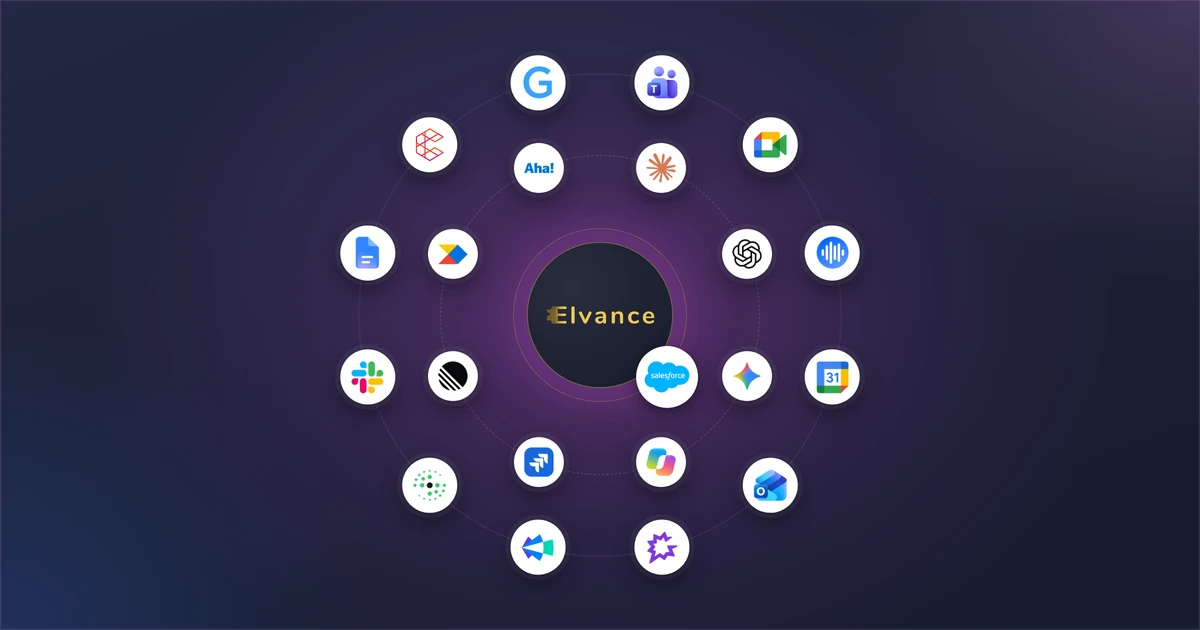
| Calls | Microsoft Teams, Zoom, Google Meet, Chorus, Otter.ai, Avoma | Turns meeting transcripts into scorecard updates |
| Calendars | Google Calendar, Microsoft Outlook | Logs meetings against the right Opportunity |
| Forecasting | Gong, Clari, Salesloft | Brings technical health and deal risk into the forecast |
| Product Management | Jira, Linear, Productboard, Aha! | Sends product gaps and live deal demand to the roadmap |
| Integrated Workflows | Slack, Microsoft Teams, Microsoft Word, Google Docs | Sends deal alerts to channels and drafts scoping documents from Opportunity data |
| Customer Lifecycle | Consensus, Gainsight | Links demo engagement to the deal and hands PreSales context to Customer Success |
See what each connection does on the Elvance integrations page.
In relay terms, then, Elvance is where you keep the baton.
Frequently Asked Questions
What is AI for PreSales support?
AI for PreSales support covers tools that take repetitive work off sales engineers: drafting RFP answers, building demos, capturing call notes and scoring technical fit on each deal. However, it is most useful when the tool writes that output back to the CRM, so the whole revenue team sees it.
Which demo tools help enterprise teams scale PreSales?
The main options are Storylane, Walnut, Navattic, Consensus and Reprise. Storylane, Walnut and Navattic focus on interactive demos and buyer-facing deal rooms, while Consensus adds video demos with stakeholder analytics and Reprise captures demo environments from your live application. Whichever you choose, check editing permissions, safe demo data and CRM-connected analytics.
Do PreSales AI tools replace sales engineers?
No. Instead, they remove preparation and admin so SEs can spend more time on discovery, solution design and proving technical fit. The SE still judges whether the product meets a requirement, which is why Elvance suggests scorecard updates rather than making them.
See your PreSales signals on a live Opportunity record: book a demo.