The most valuable AI use cases for PreSales take preparation and admin off sales engineers, then turn the reclaimed time into better discovery and more technical wins. However, saving time is the easy half. Spending it well is where most teams fall short.
Picture a typical Tuesday for an SE: two discovery calls, a custom demo for Thursday, a security questionnaire due Friday and a Slack thread asking whether a feature exists. AI can now help with every one of those jobs. Yet if the hours it saves disappear into more admin, nothing changes for the deal.
Why Is Saving Time With AI Not Enough?
Gartner’s survey of 210 CSOs and senior sales leaders (January to February 2026) found that AI tools save sellers an average of 4.8 hours per week. Even so, 72% of sales organizations report low reinvestment of that time. Meanwhile, organizations that do reinvest it in high-impact sales activities are 2.2x more likely to exceed their customer growth goals.
Buyers also still want people in the room. In a separate Gartner survey of 645 B2B buyers (August to September 2025), buyers were 32 percentage points more likely to say a sales rep, rather than GenAI, made them feel confident in their purchase decision. In short, AI should handle the prep so SEs can do more of the work buyers trust them for.
8 AI Use Cases for PreSales Teams
We have grouped them by where they sit in the deal, so you can see which stage each one supports.
Before the Call
1. Discovery and account prep. AI pulls CRM history, past call notes and public research into a one-page brief. As a result, the SE walks in knowing the stack, the stakeholders and the open questions. Gartner also expects 95% of sellers’ research workflows to begin with AI by 2027, up from less than 20% in 2024.
2. SE capacity and scheduling. AI can match SE skills, availability and deal priority to suggest who should cover each request. It also shows leaders when demand is about to outrun headcount, before burnout does.
During the Evaluation
3. Call capture and requirement tracking. Transcription tools record calls and pull out requirements, objections and action items. The valuable step, however, is mapping those back to the deal rather than leaving them in a transcript nobody reopens.
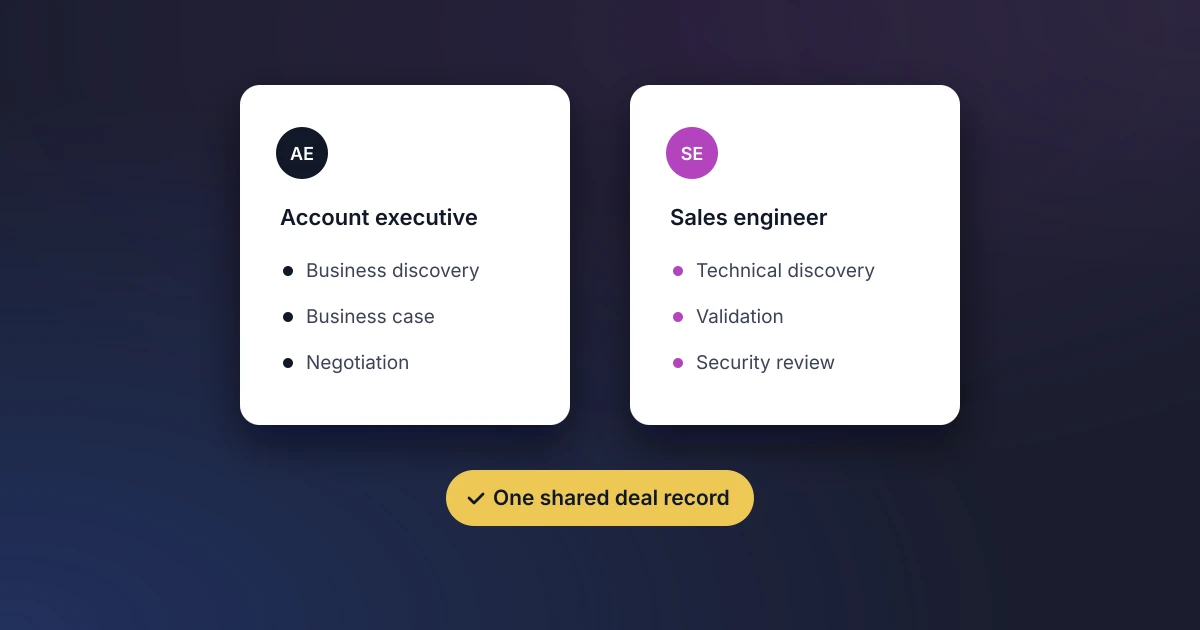
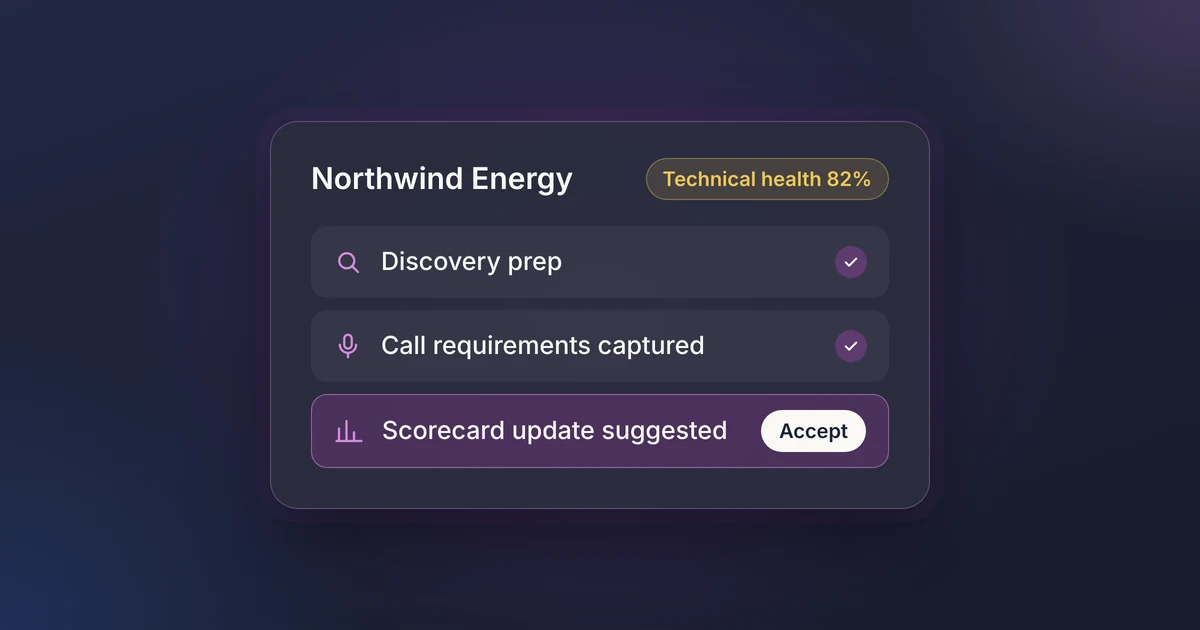
4. Technical qualification and living scorecards. AI compares what the buyer needs with what your product does, then suggests scorecard updates as new evidence arrives, such as a passed security review or a successful integration test. The SE accepts or rejects each suggestion, so technical health stays current without a weekly admin session.
5. Personalized demos. Demo automation platforms now generate tailored, interactive demos for each buyer, which cuts rebuild time for repeat scenarios. Our guide to PreSales AI tools compares the main platforms.
6. RFP and security questionnaires. AI drafts answers from a library of approved content. Consequently, the team only reviews the new or risky questions instead of rewriting the same answers every quarter.
Across the Pipeline
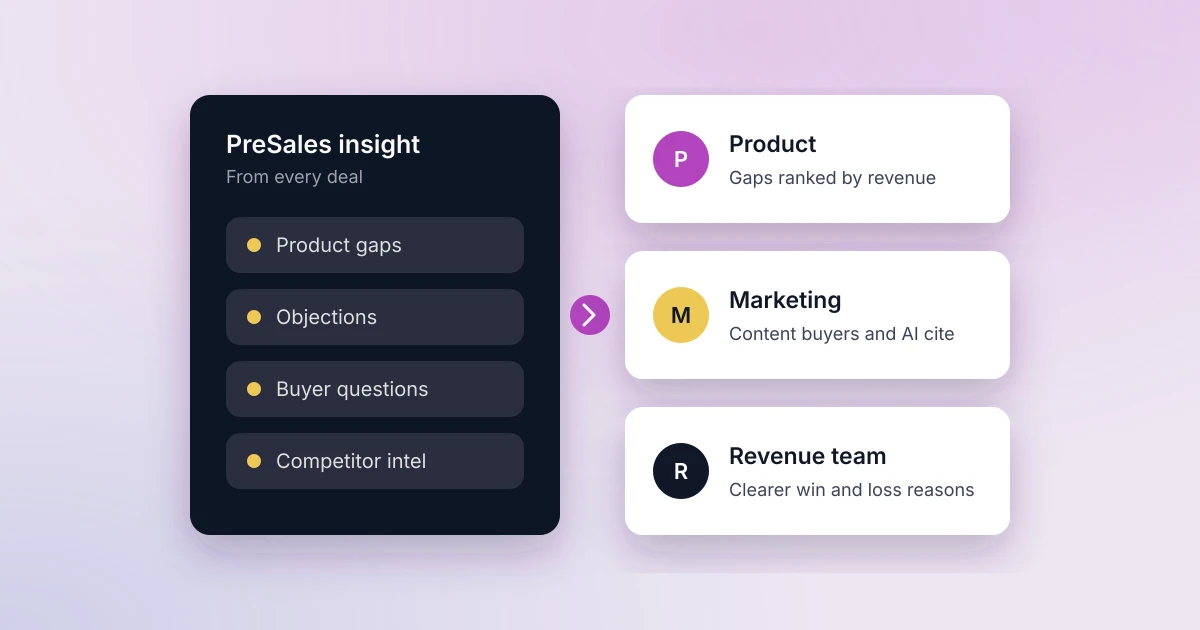
7. Product gap tracking. AI groups feature requests and lost-on-features reasons across deals, then attaches the revenue at stake. Product teams therefore get a number they can prioritize, not a list of anecdotes.
8. Pipeline questions in plain English. Through the Model Context Protocol (MCP), assistants such as Claude or ChatGPT can query live deal data. For example, a PreSales leader can ask which deals over $100,000 have an open security review, then update the record from the same chat. Our guide to MCP for PreSales shows how this works.
How Do You Pick Your First AI Use Case?
Start small, because one well-measured use case beats five pilots. Before you commit, check that it passes three tests:
- It costs real SE hours today. Baseline those hours first, so you can prove the saving later.
- The data already exists. AI needs call transcripts, CRM fields or an approved content library to work from.
- The human checkpoint is clear. Decide who approves each output, especially anything a buyer will see.
Then decide in advance where the saved hours go. For instance, you might target more discovery calls per SE, earlier SE involvement in strategic deals or more time on solution design. Otherwise, the time tends to drift back into admin.
Where Elvance Fits
Elvance covers several of these use cases inside Salesforce. AI Technical Scorecards suggest updates from call transcripts, resource scheduling shows SE capacity, and product gap tracking links missing features to the deals they affect. In addition, the Elvance connector lets teams query their pipeline from Claude, ChatGPT, Gemini or Microsoft Copilot. Because everything sits on the Opportunity, the time SEs save also turns into evidence the forecast can use. You can see every connection on our integrations page.
See Your PreSales Signals Inside Salesforce
Watch AI technical scorecards, product gaps and deal risk come together on a live Opportunity record.