A technical win is the point in a deal when the buyer’s technical stakeholders confirm your solution meets their requirements. It usually comes after discovery, demos and any proof of concept, and before commercial negotiation, procurement and signature. It does not guarantee the deal, but it is the clearest single measure of whether PreSales has done its job.
The trouble is that most teams never define it. As one PreSales Collective contributor points out, ask five account executives what a technical win means and you can get five different answers. When the definition is loose, the metric is meaningless, and the CRO stops trusting it.
This guide gives you a working definition, a checklist of criteria, three ways to measure it, and a way to record it in Salesforce so it shows up in forecasts instead of SE anecdotes.
What Is a Technical Win?
A technical win happens when the customer, not the SE, confirms that your product meets their technical decision criteria. PreSales Collective describes it as validating that the solution meets the customer’s technical requirements. In MEDDPICC terms, it is the moment the technical part of the Decision Criteria is satisfied and the technical validation stage of the Decision Process is complete.
Three details make the definition usable:
- It is the buyer’s verdict. “The demo went well” is a feeling. “Their head of IT confirmed that SSO, data residency and API limits meet requirements” is a technical win.
- It is tied to written criteria. If the requirements were never agreed, you cannot prove they were met.
- It is dated. You need the date to measure how long technical evaluation takes.
Technical Win vs Commercial Win
| Technical win | Commercial win | |
|---|---|---|
| Question it answers | Can this solution do what we need, in our environment? | Is this worth buying, from this vendor, now? |
| Who confirms it | Technical stakeholders: IT, security, architects and technical users | Economic buyer, procurement and legal |
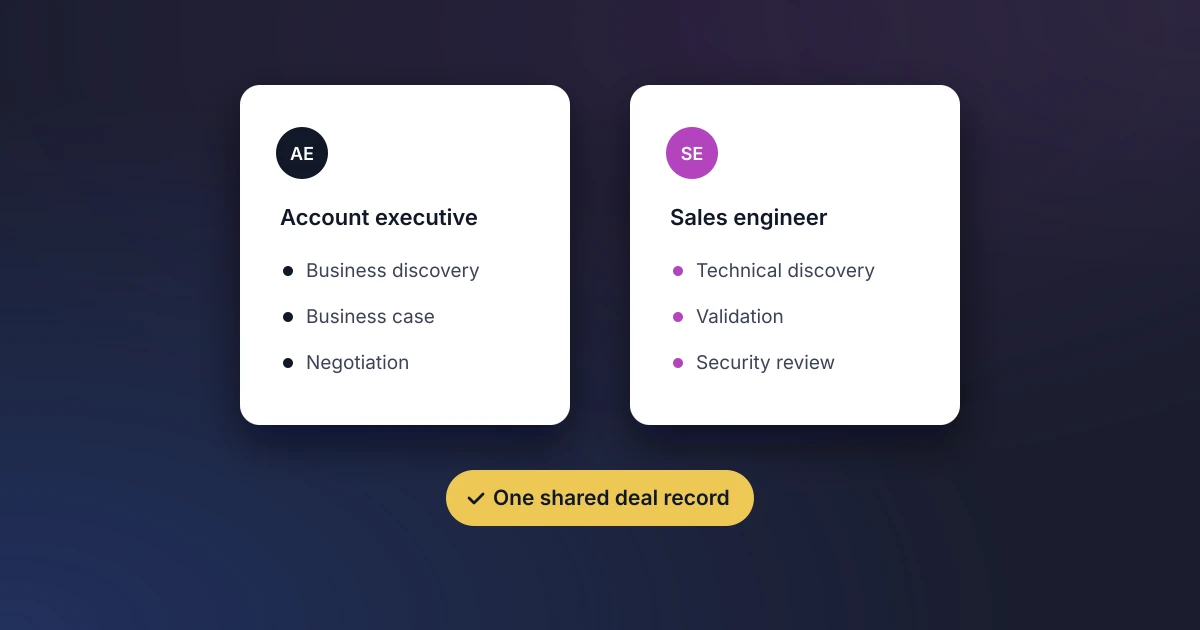
| Owner on your side | Sales engineer or solution consultant | Account executive |
| Evidence | Requirements met, POC success criteria passed, security review cleared | Signed order form |
The two can run in sequence or in parallel. What matters is that they are tracked separately, because they fail for different reasons and need different fixes. As the same PreSales Collective article notes, hitting a technical win does not mean the revenue follows: pricing, executive relationships and timing still decide the close.
Technical Win Criteria: A Checklist
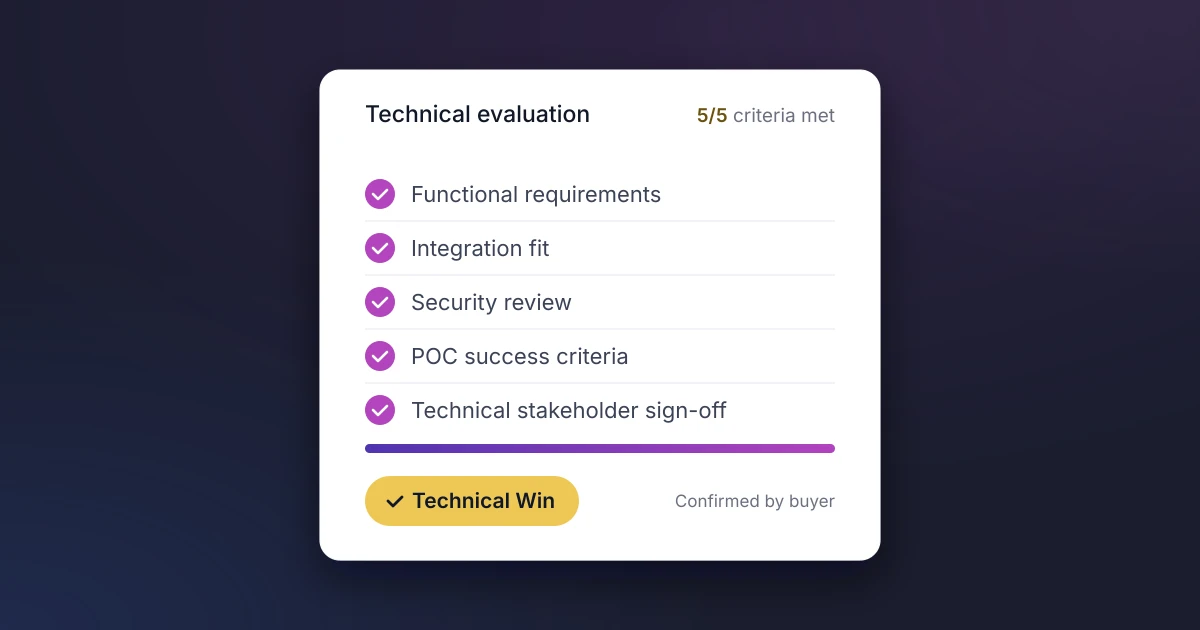
Agree these with the buyer early, ideally in discovery, and write them down where the whole deal team can see them. Declare a technical win only when every must-have is confirmed.
- Functional requirements: the use cases the buyer must see working, ranked as must-have or nice-to-have.
- Integration fit: the systems it must connect to, such as SSO, CRM, data warehouse or ticketing, and how.
- Security and compliance: questionnaire completed, security review passed, data residency and certification needs met.
- Performance and scale: agreed thresholds for users, data volumes or response times, tested where they matter.
- Proof of concept success criteria: if there is a POC, the measurable outcomes that define success, agreed before it starts.
- Technical stakeholder sign-off: named people who confirm the criteria are met, in writing or in a recorded meeting.
If you cannot name the technical stakeholders, you are not ready to declare a technical win. You are guessing.
How Do You Measure a Technical Win?
Technical win was the most debated KPI at one PreSales Collective leadership roundtable, with some leaders arguing it is too arbitrary to report. That objection is fair when the definition is loose. Once it is tied to the checklist above, it becomes, as we argued in our DEMOFEST London recap, the leading indicator most PreSales teams under-use. Three metrics make it reliable.
Technical Win Rate
Technical win rate = technical wins ÷ opportunities that completed a technical evaluation × 100
Only count deals where the evaluation has finished, as a technical win or a technical loss. Including open deals drags the number down and makes it swing every quarter. For example, if 40 opportunities completed a technical evaluation last quarter and 26 ended in a technical win, your technical win rate is 65%.
Technical Win to Close Rate
Technical win to close rate = closed won deals with a technical win ÷ closed deals (won or lost) with a technical win × 100
This shows what happens after PreSales hands the deal back. Using the same example: of the 26 technical wins, 18 closed won, 6 closed lost and 2 are still open, so 18 ÷ 24 gives a 75% technical win to close rate.
Read the two together. A high technical win rate with a low close rate points to commercial issues, such as pricing, procurement or a missing economic buyer. A low technical win rate points to discovery, demos or POC execution.
Days to Technical Win
This is the number of days from the first SE meeting to technical sign-off. A rising number usually means unclear criteria, stakeholders joining late, or POCs that started without agreed exit criteria.
Treat the figures above as an illustration, not a benchmark. Companies define a technical win differently, so published benchmarks rarely compare like with like, and your own trend line is the most useful comparison.
Why Are Deals Lost After a Technical Win?
Hearing that you are the preferred solution feels like the finish line. It isn’t. These are the most common reasons a deal still slips:
- No access to the economic buyer: the technical team is convinced, but the person who owns the budget was never engaged.
- No business case: the buyer knows the product works but not what it is worth to them.
- Procurement and legal delays: security terms, data processing agreements or vendor onboarding add weeks.
- Timing or priority changes: a reorganization or budget freeze pauses the project, not your product.
- A late competitor or “do nothing”: the buyer uses your evaluation to negotiate with someone else, or decides to wait.
Record each of these as a structured loss reason in your CRM. After a few quarters, the pattern tells you whether to invest in PreSales enablement or in commercial skills.
How Can Technical Wins Improve Your Next Deal?
Every technical evaluation, won or lost, is data you can reuse:
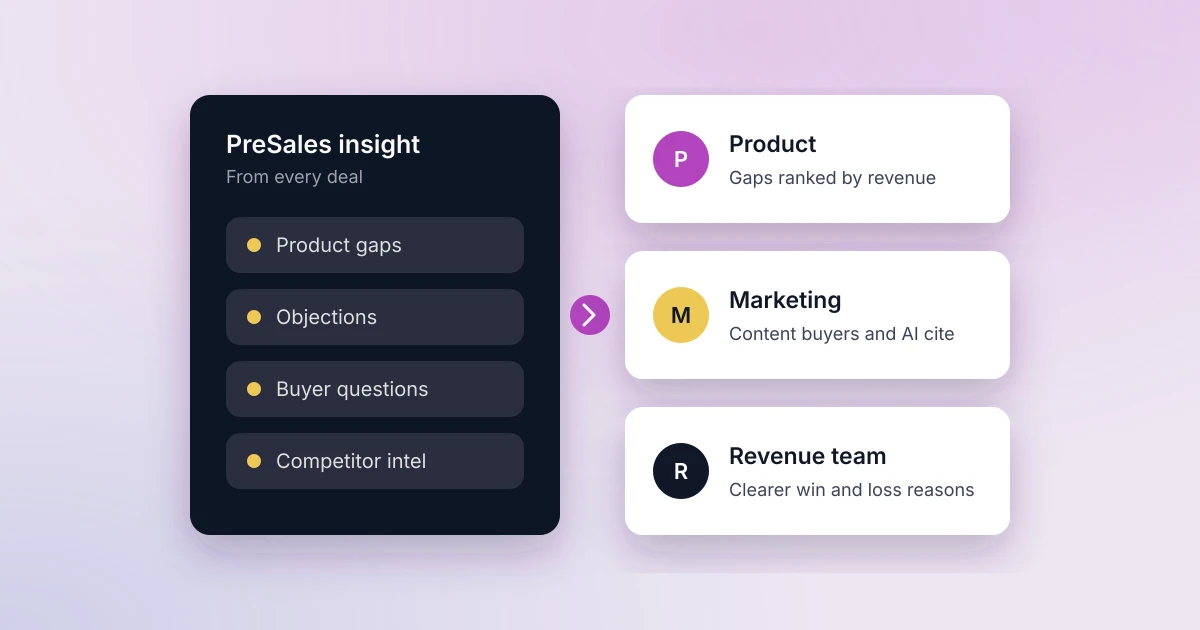
- Turn technical losses into product evidence. If the same missing capability keeps costing evaluations, total the pipeline value affected and take that number to Product.
- Find your winning patterns. Compare won evaluations by industry, deal size and SE involvement to see which discovery questions, demos or POC designs appear in the wins.
- Move the technical win earlier. Agreeing criteria in discovery, rather than after the demo, shortens evaluation and exposes poor-fit deals sooner.
This matters more as buyers do more of the evaluation alone. Gartner found that 67% of B2B buyers prefer a rep-free experience, yet 69% turn to sales reps to validate AI-generated insights. When buyers arrive already researched, technical validation is the conversation they still want a person for, so it pays to run it well.
How Do You Track Technical Wins in Salesforce?
If the technical win lives in an SE’s head or a spreadsheet, it never reaches the forecast. Put it on the Opportunity record, where sales leaders already look:
- Add a technical status, for example Not Started, In Evaluation, Technical Win or Technical Loss, plus a technical win date.
- Link that status to your criteria checklist, so Technical Win can only be set once the must-haves are confirmed.
- Capture technical loss reasons and product gaps as structured fields, not free text.
- Report technical win rate and technical win to close rate by team, segment and quarter on a standard Salesforce dashboard.
Where Elvance Fits
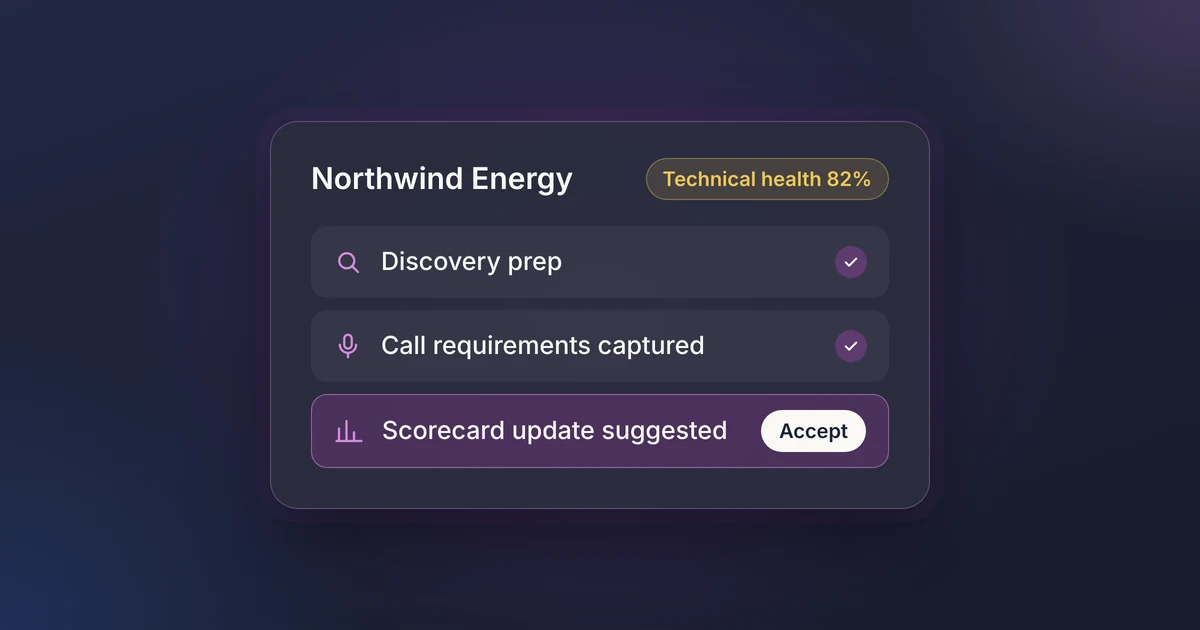
Elvance is the AI PreSales platform built inside Salesforce, so technical evaluation data sits on the Opportunity record instead of in a separate tool. AI technical scorecards grade each opportunity against the factors that predict a win, using MEDDIC or your own templates. Risks are tracked to resolution, product gaps flow into Jira, Linear or ProductBoard, and because everything is native Salesforce data, technical win reporting works in the dashboards your revenue team already uses. For how this fits alongside demo, call and RFP tools, see our guide to PreSales AI tools.
Frequently Asked Questions
Who decides a technical win?
The customer’s technical stakeholders. The SE can recommend declaring it, but the win only counts when named people on the buyer side confirm the agreed criteria are met.
Is a technical win the same as a successful POC?
Not always. A proof of concept is one way to earn a technical win, but many deals reach one through discovery, demos and a security review without a formal POC.
What is a good technical win rate?
There is no reliable universal benchmark, because companies define a technical win differently. Set a clear definition, measure it for two or three quarters, and improve against your own baseline.
Can you lose a deal after a technical win?
Yes. Pricing, procurement, timing and access to the economic buyer can all stop a deal after the technical evaluation is won. That is why technical win to close rate is worth tracking alongside technical win rate.
See technical scorecards on a live Opportunity record: book a demo.