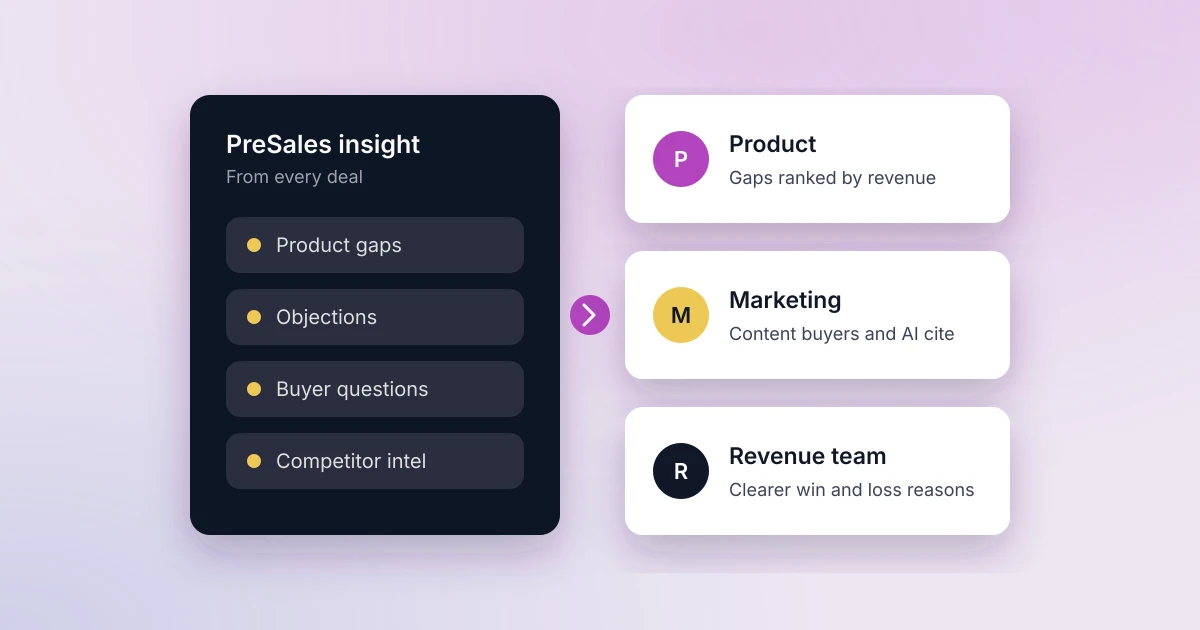
The PreSales voice of customer is unlike any other: sales engineers hear the unfiltered technical questions, objections, gaps and competitor comparisons that decide whether a deal closes. In the AI era, Product needs that insight to prioritize the roadmap, and Marketing needs it to answer the questions buyers now ask AI tools before they ever speak to your team.
That makes PreSales leaders key stakeholders well beyond the deal. This post explains how the SE role has changed, why Product, Marketing and the wider revenue team depend on what SEs learn, and how to build a loop that turns that insight into results instead of losing it in chat threads.
How the SE Role Has Changed
Sales engineers have always done more than demos, and the data now shows how much more. In the 2026 Sales Engineering Compensation and Workload Report from Consensus, SEs spent 44% of their time on cross-functional work. That included 14% on implementation and customer success, 11% on marketing and 9% on product development.
Buyers are reshaping the role too. Gartner found that 69% of B2B buyers turn to sales reps to validate AI-generated insights, and Forrester’s Predictions 2027 expects product experts and customer references to become more important as buyers check what AI tells them. SEs now spend less of their value on showing the product and more on proving it, which means they hear the hardest questions first.
Why Product Needs PreSales
Product teams get plenty of feedback. What they rarely get is feedback with commercial context. SEs can supply it:
- Gaps tied to revenue. A missing capability that blocked three enterprise evaluations is a different priority from one requested once in a support ticket.
- Technical loss reasons. SEs know whether a deal was lost on a feature, an integration, security or performance, so Product can see patterns rather than anecdotes.
- Requests with context. SEs can explain the workflow behind a request and whether a workaround already exists, so the roadmap does not simply follow the loudest customer.
Why Marketing Needs PreSales
Marketing writes for buyers, but SEs talk to them every day. Four kinds of PreSales insight make marketing sharper:
- The buyer’s own words. Call transcripts show how technical buyers describe their problems, which is often different from the language in your positioning.
- Real objections. The concerns SEs handle in evaluations are the ones your content should answer before the first call.
- Competitive intelligence. SEs see head-to-head evaluations firsthand, including where you win, where you lose and why.
- Proof that holds up. SEs know which claims survive a technical evaluation, which keeps marketing accurate and protects trust.
What Changes in the AI Era?
Buyers increasingly start with AI. In a TrustRadius report covered by Search Engine Journal in 2025, 72% of B2B buyers said they see Google AI Overviews during research, and 90% said they click through to the cited sources to fact-check them. Forrester goes further for 2027, predicting that agentic buying will play a role in 75% of B2B purchases, and that buyer agents will need accurate, structured product, security and compliance information.
Here is the connection most companies miss: the questions buyers put to AI tools are the same technical questions SEs answer every day. Does it integrate with our stack? How does it handle our security requirements? What are its limits? When your public content answers those questions clearly and accurately, AI tools have something trustworthy to cite. When it does not, buyers arrive with wrong assumptions, and SEs spend the first call correcting them.
That turns PreSales knowledge into a marketing asset. The best source for an AI-ready FAQ, integration guide or security overview is not a brainstorm. It is the list of questions your SEs answered last quarter.
Why the Wider Revenue Team Should Care
This is not only a PreSales, Product and Marketing conversation. Every part of the revenue team benefits when SE insight is captured and shared:
- CROs and sales leaders get a clearer view of why deals are won and lost, and which gaps put forecast at risk.
- Account executives get messaging and proof points that reflect what buyers actually ask, plus earlier warning of technical risk on their deals.
- RevOps gets structured data instead of free-text notes, so reporting on gaps, objections and competitors works alongside pipeline reporting.
- Customer success inherits the requirements and commitments made during the evaluation, which makes onboarding smoother.
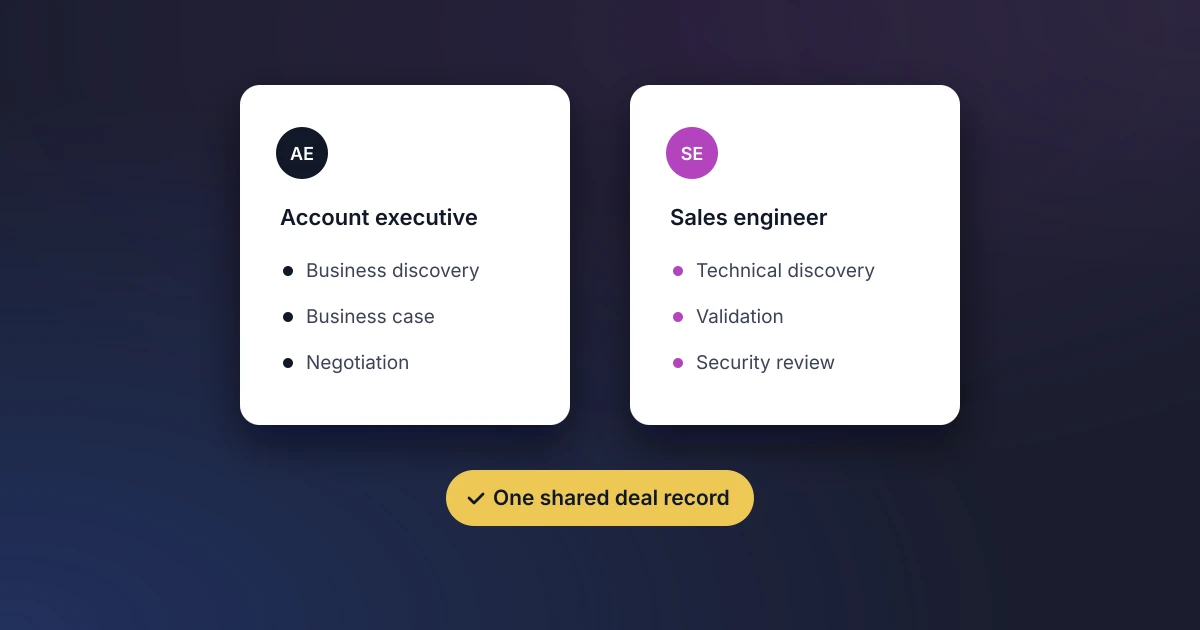
AEs contribute to the loop as well. They hold the business side of the voice of customer, from budget pressures to executive priorities, and the picture is only complete when both views sit on the same deal record. Our guide to Sales and PreSales collaboration covers how to share ownership at each stage.
How to Build the PreSales Insight Loop
Most SE insight already exists. It just disappears into chat threads, meeting notes and people’s heads. Five steps turn it into something Product, Marketing and the revenue team can use:
- Capture it on the deal. Record product gaps, technical objections and competitors in structured fields on the opportunity, so every insight carries its deal value and outcome.
- Review it together monthly. Hold a short session with PreSales, Product, Marketing and RevOps to review the top gaps by revenue, the most common objections and recent competitive losses.
- Publish the answers. Turn the ten technical questions SEs hear most into public content: FAQs, integration pages and security documentation that buyers and AI tools can find.
- Credit the source. Track how often SE insight shapes roadmap decisions and content, and report it alongside your other revenue metrics. Influence that goes unmeasured rarely earns a seat at the table.
- Close the loop. Tell the field what changed because of their input. SEs keep sharing when they see results.
What Each Team Gives and Gets
| Team | Gives to the loop | Gets from the loop |
|---|---|---|
| PreSales | Gaps, objections, competitor insight and technical questions | Better content, a roadmap that reflects deal reality and recognized influence |
| Product | Roadmap decisions and context on workarounds | Demand signals tied to revenue and outcomes |
| Marketing | Content, messaging and competitive materials | Buyer language, real objections and accurate proof points |
| Sales and RevOps | Business context and clean data structures | Clearer win and loss reasons and earlier warning of risk |
Where Elvance Fits
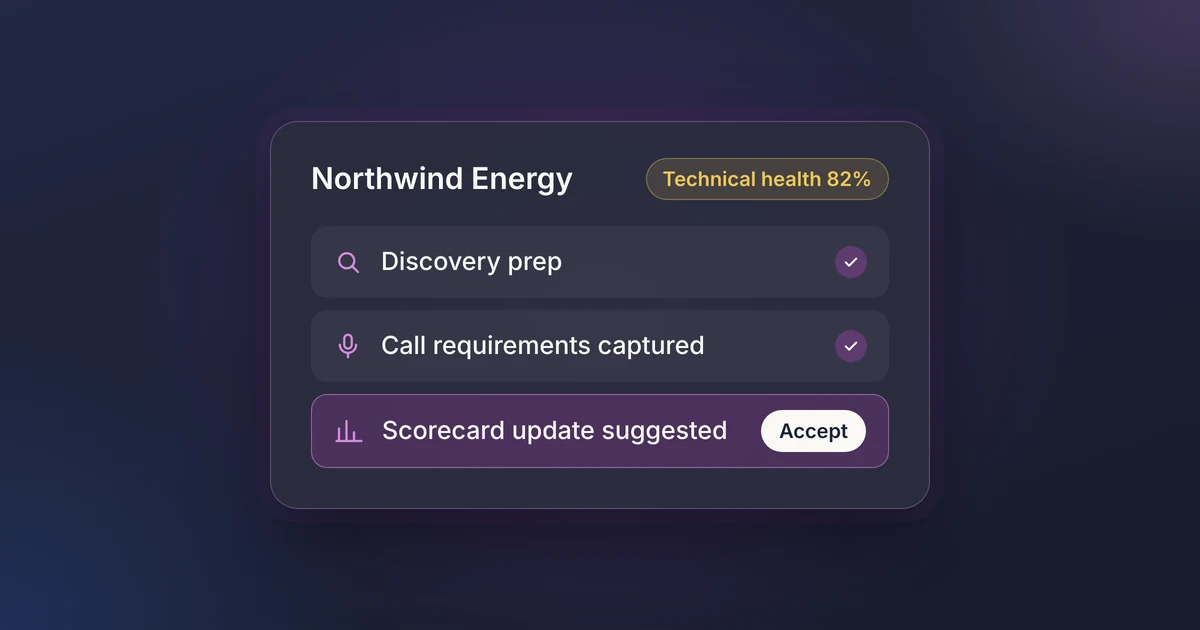
Elvance is the AI PreSales platform built inside Salesforce, so SE insight lives on the same Opportunity records the revenue team already uses. SEs capture product gaps during deals, and those gaps flow into Jira, Linear or ProductBoard with the revenue attached. AI technical scorecards draw on what customers say in meetings, and risks stay visible until someone resolves them. With the Elvance MCP connector, teams can ask an AI assistant such as Claude which gaps are costing the most revenue, without building a separate report.
Frequently Asked Questions
What is the voice of customer in PreSales?
It is the technical insight SEs gather during evaluations. That covers the questions buyers ask, the objections they raise, the gaps they find and the competitors they compare. Captured in a structured way, it shows what buyers need and why deals are won or lost.
How should PreSales share product feedback?
Record each gap against the opportunity it affects, with the deal value and outcome. Then route it to the product backlog. A regular review with Product can focus on the gaps with the most revenue at stake, not the most recent request.
How does PreSales help with AI search visibility?
SEs know the technical questions buyers ask most. Turning those questions into clear, accurate public content gives AI tools and search engines reliable answers to cite, and helps buyers arrive at the first call with correct expectations.
See how PreSales insight flows from the deal to Product and the revenue team: book a demo.