On August 26 and 27, PreSales leaders, solutions consultants and sales engineers met at Convene Willis Tower in Chicago for Sol/Con 2026, the flagship conference run by PreSales Collective. Elvance was there as an exhibiting partner. Across two days, the agenda kept returning to one idea: AI makes PreSales more valuable, but only for teams that change how they work.
This recap of Sol/Con (often written SolCon) follows the event’s three tracks, adds the research behind the big ideas, and ends with five questions worth asking before 2027 plans lock.
Inside Sol/Con 2026
Sol/Con 2026 was a two-day conference for PreSales professionals at every level, from individual contributors to VPs. According to the session guide, it ran 22 sessions across three tracks: AI, Leadership and GTM, with more than 30 speakers.
The program mixed keynotes, panels and hands-on workshops from 2Win, with practitioners from Brex, DroneDeploy, Iterable, GBG and Red Sift among the speakers. Below, we’ve followed it the way attendees did: keynotes first, then each track.
The Keynotes: PreSales Is the Strategic Seat, If It Stops Rescuing
The three keynotes framed the whole event: AI raises the value of PreSales, but heroics will not get teams there.
Jack Cochran opened day one by arguing that as AI narrows the gap between products, the edge moves to the person who designs the outcome and owns the path from problem to value. He also covered the rise of forward-deployed roles and how the function is being scoped, leveled and paid.
Nicole Jackson of Brex opened day two with the other side of that coin. Solutions consultants love to rush in and rescue sales and the customer, and at scale those rescues turn into burnout. Her case was for shifting teams from reactive heroics to systemic impact. Dan Conway, CEO of 2Win, closed with a keynote on why PreSales grows more valuable in the age of AI.
Between sessions, the Presales Podcast recorded a live episode with Rew Dickinson, Jack Cochran and Matthew James on four skills that drive sales outcomes. One theme stood out: Gong call analysis showing SEs filling calls with product talk instead of listening.
AI Track: Grounding Beats Hype
The AI track was about practice, not promise, and its clearest message was that AI is only as good as the context behind it.
Jay Mulakala of DroneDeploy showed how AI deals stall at the “cool demo” stage, and how his team uses AI tools to qualify opportunities, structure evaluation plans and tie every proof of value to ARR. A panel of SE leaders took on the claim that AI replaces the human SE, focusing on real limitations and how to prove value at scale. On day two, a panel on empathy and judgment made the human case, and David Duffett argued that clear communication matters more, not less, amid AI-generated noise.
2Win’s lab showed the same agent improving across three versions: a generic prompt, a prompt grounded in context, and one grounded in methodology. Gartner’s research points the same way. It predicts that by 2028 AI agents will outnumber sellers ten to one, yet fewer than 40% of sellers will say agents improved their productivity, and warns that agents on fragmented systems simply spread the fragmentation.
For teams comparing options, our guide to PreSales AI tools maps where each category fits.
Leadership Track: From Busy to Strategic
The leadership sessions kept asking how leaders stop managing activity and start setting standards.
Ron Whitson and Chris White named the trap directly. Leaders promoted for problem-solving often keep solving problems, and avoiding friction keeps PreSales stuck in support mode. Katie Barends of Iterable showed the alternative: she defined what great looks like for enterprise solutions consultants with a 6 Cs framework that shaped hiring, coaching and performance.
Two panels covered the people side, from building teams that top talent wants to join to what changes at each rung of the leadership ladder. 2Win’s earned influence workshop set out six pillars for leading without the title: clarity, credibility, trustworthiness, curiosity, courage and intentionality.
AI will not free up leadership time by itself. A Gartner survey of 210 sales leaders found AI saves sellers 4.8 hours a week, yet 72% of sales organizations report low reinvestment of that time into high-value work. Those that reinvest are 2.2 times more likely to exceed customer growth goals. The survey covers sales broadly, not SEs alone, but the lesson carries over.
GTM Track: Deals Are a System, Not a Demo
The GTM track treated the deal as something PreSales manages end to end, not a series of demos it supports.
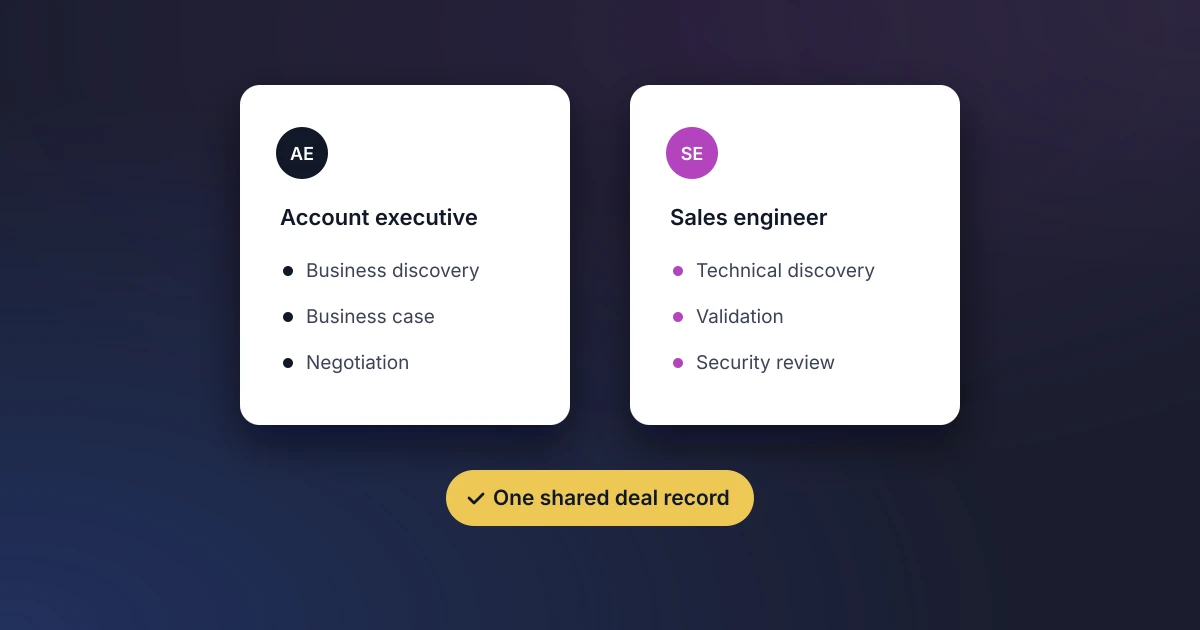
Dmitri Lee of Presales Navigation System argued that deals slip less from poor execution than from missing deal management: decisions surfaced late, evaluation criteria not enforced, risk assumed rather than inspected. Paul Vogt of GBG ran a workshop on turning a leader’s instincts into frameworks the team can run without them, and 2Win had sales, PreSales, product and marketing build one shared win plan in the room.
Billy McDiarmid of Red Sift shared how a small PreSales team took a new security category to market through a reseller, built around one defensible value metric a non-technical seller could run with. Panels on specialist versus generalist teams and on selling to the C-suite rounded out the track, both coming back to where scarce SE time should go.
We think the common thread across all three tracks is evidence. Standards, AI and influence only work when what happens on each deal is captured the same way, every time.
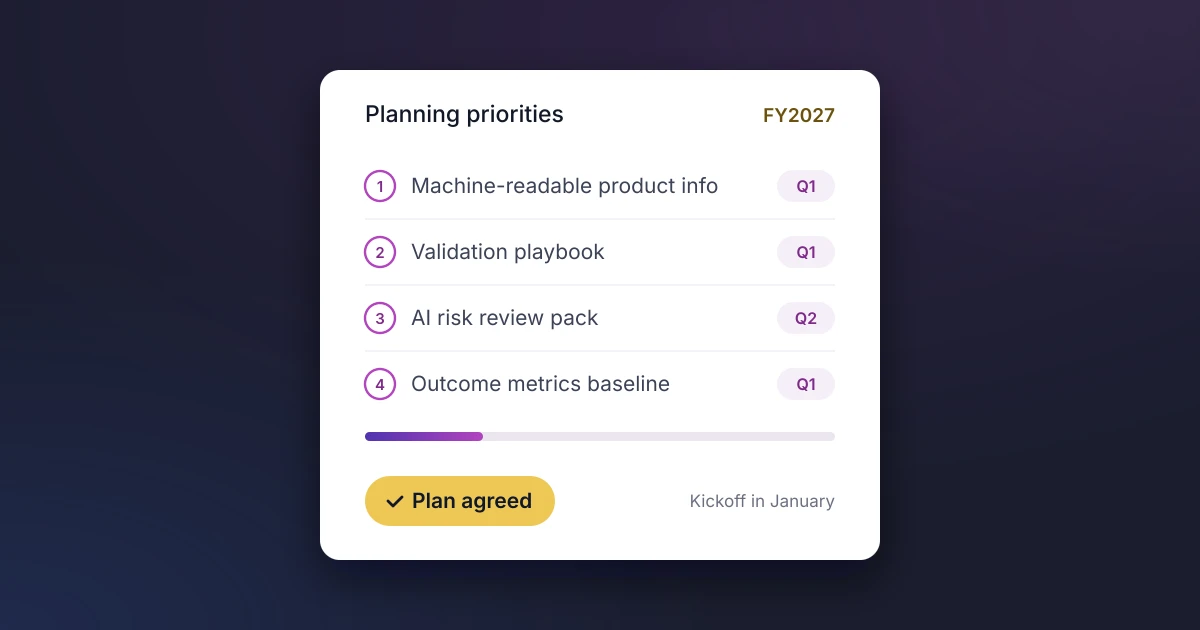
Five Questions to Take Into 2027 Planning
If Sol/Con had a homework assignment, it would be these five questions:
- Could a new SE describe what great looks like on a deal without asking you?
- When a deal goes wrong, who gets pulled in, and is it always the same person?
- Where did the time AI saved your team last quarter actually go?
- If you pointed an AI agent at your Opportunities today, would it find clean technical data or half-filled fields?
- When you ask product for a feature, can you show which deals it is costing?
What We’re Taking Back From Chicago
Several of Sol/Con’s ideas map closely to the problems Elvance was built to solve. Here’s how each one plays out inside Salesforce.
| The Sol/Con idea | How Elvance supports it in Salesforce |
|---|---|
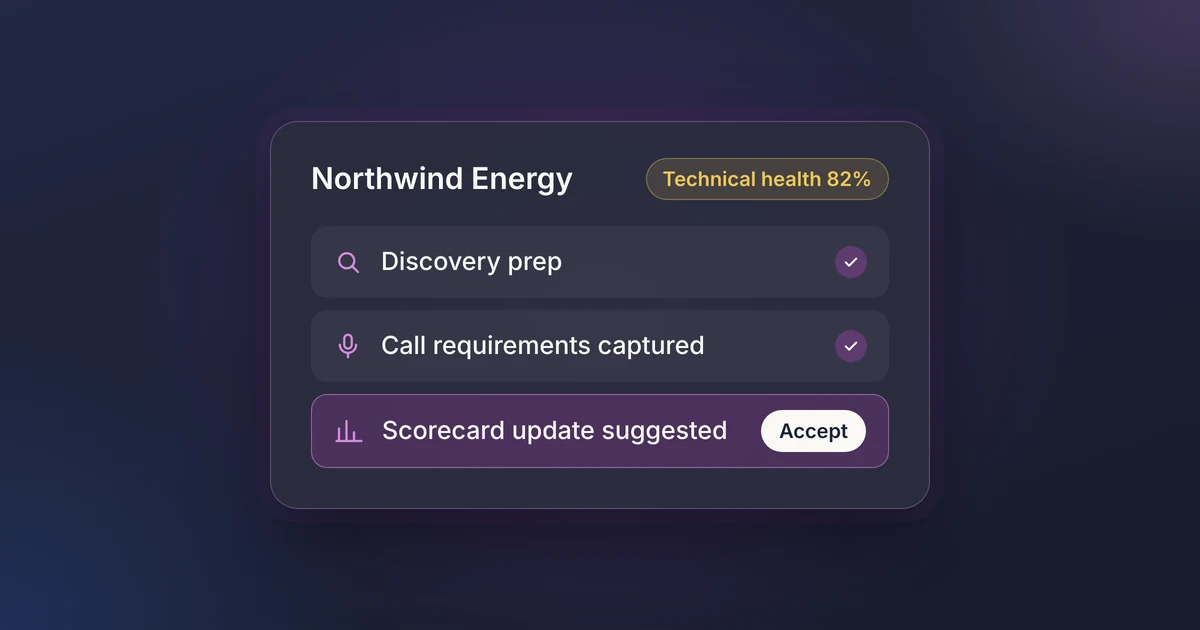
| Stop being the hero | Intelligent Activity Capture logs meetings and demos against the right Opportunity automatically, so deal knowledge doesn’t stay in one person’s head. With shared context on every deal, anyone on the team can step in and support it, instead of the same SE getting every escalation. |
| Manage deals as a system | Every Opportunity is scored against the same technical criteria, so deals are inspected consistently and the technical win sits next to the forecast. |
| Ground AI in real context | Meeting transcriptions capture what the customer actually said, and AI Scorecards score each deal from those conversations, with direct customer quotes as the evidence. That gives AI, including the Elvance connector for Claude, real buyer language to work from instead of half-filled fields. |
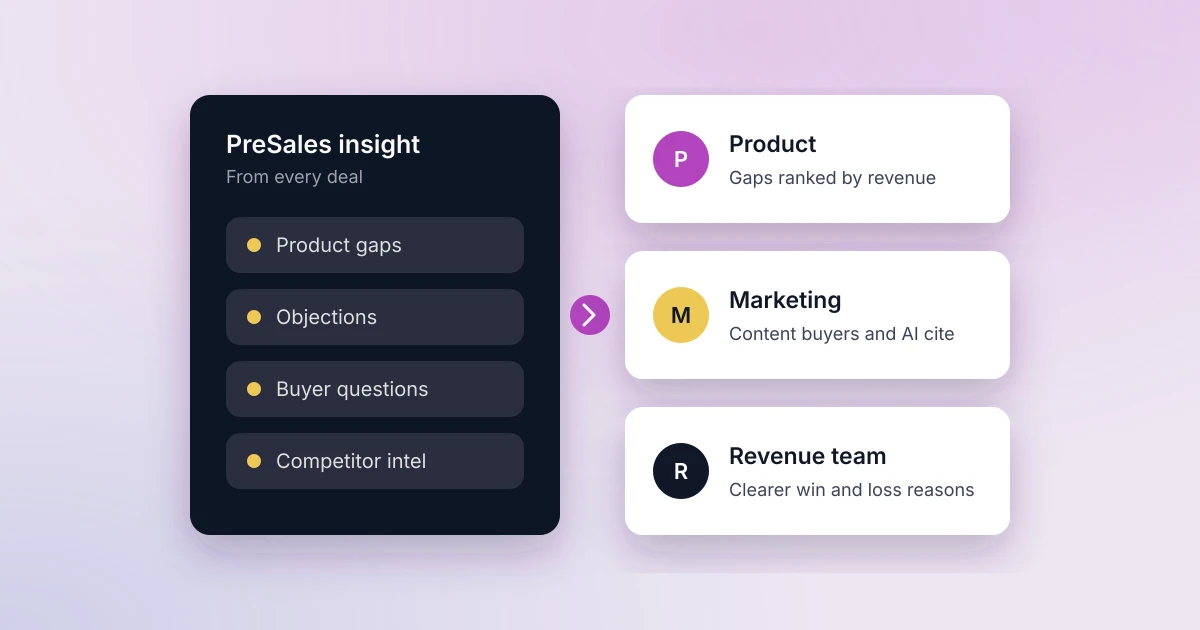
| Influence with evidence | Product gap tracking ties missing features to the pipeline they affect, ready for the next roadmap conversation with your CPO. |
Thanks to PreSales Collective, the speakers, and everyone who stopped by our stand in Chicago.
Want to see it on a live Opportunity? Watch the Elvance demo videos.